A quick word on how to read this stall. These are not "best of" rankings. They are dishes so tied to a place that locals argue about them, and each one carries a little history of migration, trade or sheer practicality. We note where they came from, what to look for, and a kitchen tip that helps you get close at home.
Bangkok: an evening on Yaowarat Road
Yaowarat Road, the spine of Bangkok's Chinatown, turns into one long open-air kitchen once the sun drops. Neon signs in Chinese and Thai hang over carts selling guay jub — rolled rice noodles in a peppery, glossy pork broth — alongside grilled seafood and toasted bread with pandan custard for dipping. Elsewhere in the city, pad kra pao is the dish people order when they cannot decide: minced meat stir-fried hard with chilli, garlic and holy basil, served over rice with a crisp-edged fried egg.
Mexico City: tacos al pastor
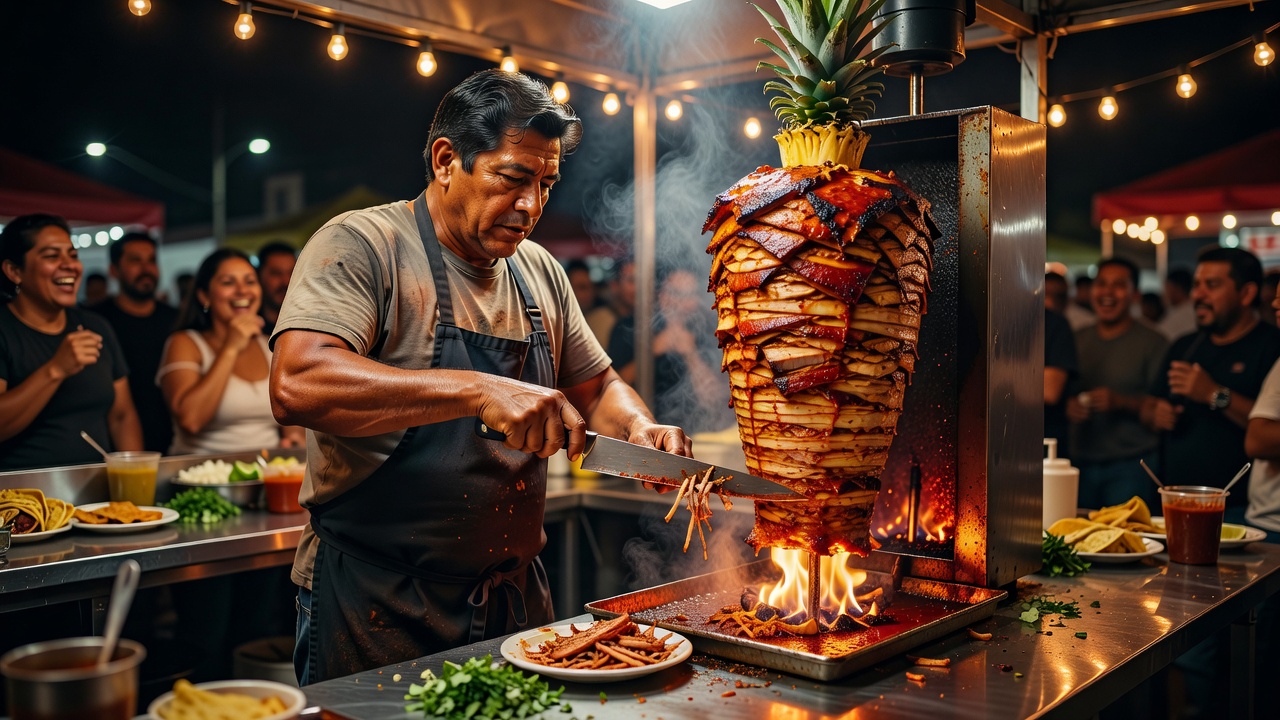
Tacos al pastor trace back to Lebanese immigrants who brought spit-roasted meat to Puebla and Mexico City in the early twentieth century. Over the decades lamb became pork, the marinade picked up dried chiles and achiote, and the vertical spit became the trompo. Watch a good taquero work: a thin shaving of meat onto two small corn tortillas, a flick of the knife to send a sliver of roasted pineapple from the top of the spit, then onion, coriander and salsa.
Istanbul: balık ekmek at Eminönü
On the waterfront by the Galata Bridge, grilled mackerel fillets go into a length of bread with sliced onion and lettuce, finished with lemon and a pinch of salt. It is a dockside lunch in its purest form. Wash it down with şalgam, a tangy fermented drink made from purple carrot and turnip, or a cup of pickle brine from a turşu stand.
Mumbai: vada pav
Widely credited to Ashok Vaidya, who sold it near Dadar station in 1966, vada pav is a spiced potato fritter tucked into a soft pav bun with dry garlic chutney and often a fried green chilli on the side. It costs very little, it is eaten standing up, and it has fed generations of commuters and mill workers.
Lagos: suya
Suya comes from the grilling traditions of the Hausa people of northern Nigeria and is now sold on street corners across the country. Thin slices of beef are threaded onto sticks, rubbed with yaji — a dry mix built on ground roasted peanuts, ginger, chilli and other spices — and grilled over open flame. It is served wrapped in paper with raw onion, tomato and extra yaji.
Singapore: hawker centres
In December 2020, UNESCO inscribed Singapore's hawker culture on its Representative List of the Intangible Cultural Heritage of Humanity. Maxwell Food Centre is a classic first stop for Hainanese chicken rice, while at Lau Pa Sat the satay stalls fire up in the evening when Boon Tat Street closes to traffic.
Palermo: pani ca meusa
Palermo's spleen sandwich is not for the timid, and that is the point. Veal spleen and lung are boiled, sliced and finished in lard, then piled into a soft sesame bun. Order it schietta (just salt and lemon) or maritata (married, with caciocavallo or ricotta). Look for it around the Ballarò market.
Taipei: oyster omelette
At Raohe Street and Shilin night markets, o-a-jian sizzles on wide griddles: oysters, egg and leafy greens bound with sweet potato starch so the edges go crisp and the centre stays chewy, then glossed with a sweet-savoury red sauce. At the Raohe entrance by Ciyou Temple, the queue for pepper buns baked against the wall of a clay oven is part of the show.
Try it at home: skillet "al pastor" tacos
You will not get a trompo into a flat kitchen, but a very hot heavy pan gets you the charred edges that matter. Serves four.
| Amount | Ingredient | Note |
|---|---|---|
| 600 g | Pork shoulder | Sliced 5 mm thin |
| 3 + 1 | Dried guajillo + ancho chiles | Stems and seeds out |
| 2 tbsp | Achiote paste | For colour and earthiness |
| 60 ml | Pineapple juice | Plus 200 g fresh pineapple |
| 2 tbsp | White vinegar | Brightens the marinade |
| 2 | Garlic cloves | Peeled |
| 1 tsp each | Ground cumin, salt | Plus ½ tsp dried oregano |
| 12 | Small corn tortillas | Serve doubled up |
| To serve | Onion, coriander, lime, salsa | Finely chopped |
- Toast the dried chiles in a dry pan for about 30 seconds per side, then soak in hot water for 15 minutes.
- Blend the drained chiles with achiote, pineapple juice, vinegar, garlic, spices and salt until smooth.
- Coat the pork and marinate in the fridge for at least 2 hours, ideally overnight.
- Heat a cast-iron or carbon-steel pan until smoking. Sear the pork in small batches, 2–3 minutes per side, until the edges char.
- Char thick pineapple slices in the same pan, then chop everything together on a board.
- Warm the tortillas, double them, and pile on meat, pineapple, onion, coriander, salsa and a squeeze of lime.
Crowding the pan is the one real mistake: the meat steams instead of searing. Work in batches and keep the cooked pork warm in a low oven.